How do nonprofits and churches use Facebook groups to reach people?
November 20, 2026 · MGSA Team

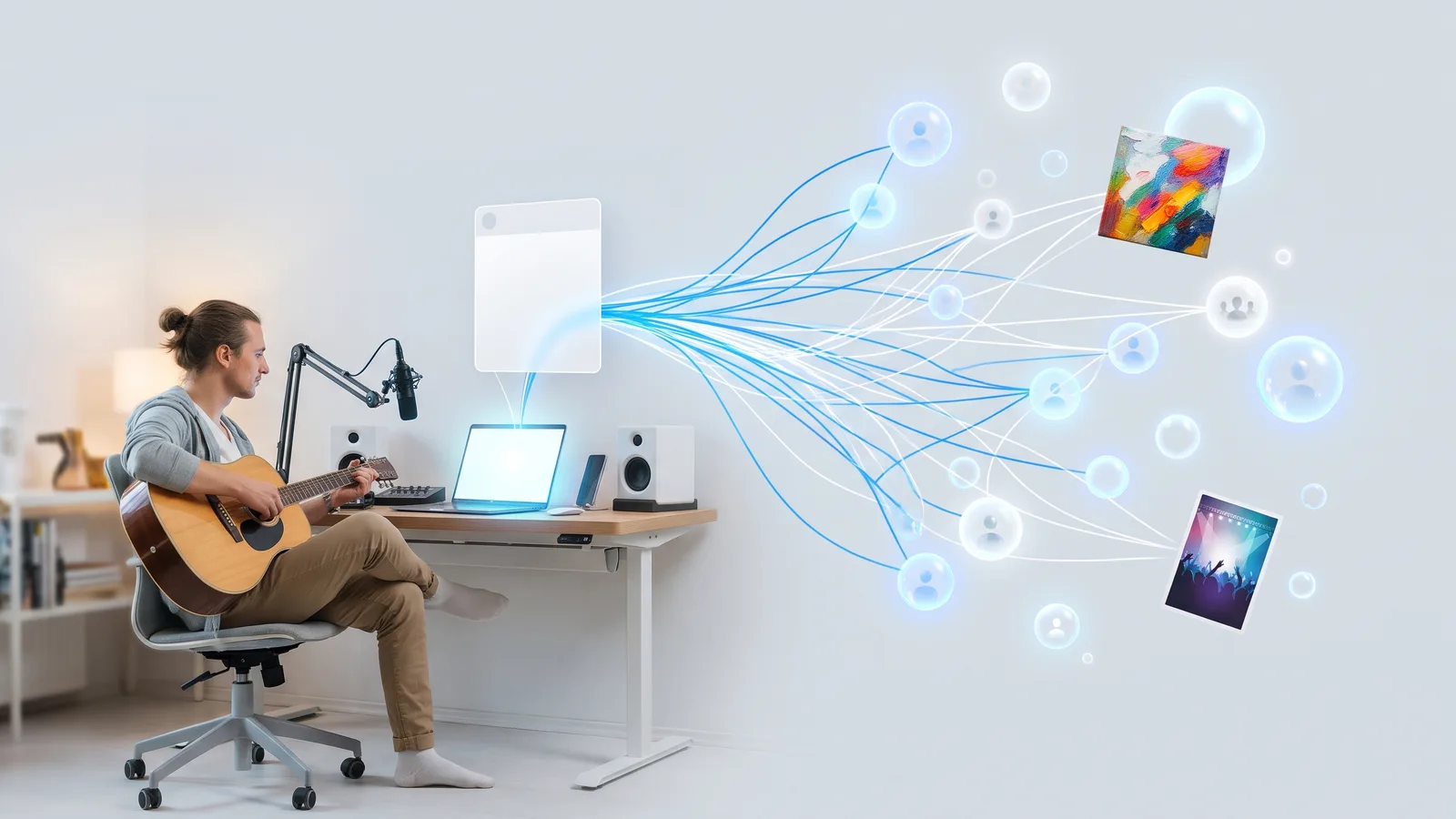
Nonprofits and churches use Facebook groups in two ways: they run their own members, volunteer or congregation group, and they share events and volunteer calls into local community groups they belong to. Both work best with clear rules, helpful posts and a steady rhythm. That is the core of how nonprofit Facebook groups work.
Key takeaways
- Run one closed group for the people who already care: volunteers, members or a congregation. Screen join requests and share the moderating.
- Use local community groups to reach new people with events and volunteer calls, but check each group's promotion rules first.
- Post on a rhythm people can predict. Advice from nonprofit and church sources includes weekly formats and several posts a week.
- Pace and personalize shares. MGSA can share one event or volunteer call to a "Local Community" preset in one click, at a natural pace, with AI text variations.
Should a nonprofit or church start its own Facebook group?
Yes, if you have people who would talk to each other, such as volunteers, members or a congregation.
Nonprofit Marketing Guide (Kristina Leroux, published 2012 and modified 2021, so some details may be dated) says group posts notify members, which makes them more likely to be seen than Page posts. She also describes using groups for volunteers, training, a major-donor circle and regional groups for national organizations.
Meta's own newsroom (October 2024, updated June 2025) says almost 1.8 billion people use Facebook Groups every month. People are already used to the format.
What kind of group should we set up?
A closed or private group is the usual choice. Leroux describes three types, open, closed and secret, and says her team uses closed groups. Linck also recommends a private group so you can screen who joins.
Facebook's labels and menus change, so check the current privacy options when you set up.
How do we keep a group healthy?
Share the work, screen who joins and keep a rhythm.
Screen new members
Jen Linck, writing for Nonprofit Pro (June 2018), suggests making the group private and asking applicants a few questions. Thoughtful answers, she says, tend to point to the people most likely to support you.
Don't moderate alone
Jessica Spivey on theChurch.digital (June 2020) says not to run a church group alone. Bring in staff, ministry leaders and mature volunteers as moderators, and remove spam quickly. Pin a post that explains what the group is for.
Set a weekly rhythm
Spivey suggests recurring formats such as a Monday encouragement post, a Wednesday prayer thread and a Friday testimony prompt. Different team members can own different days.
Linck recommends posting at least three times a week and going live at the same time each week. Treat that as one author's advice, not a Facebook rule.
Get members talking
Both sources point to conversation. Linck suggests questions, polls and introductions. Spivey suggests open questions, the Welcome New Members feature and quick replies to early comments. Linck also says to thank helpful members publicly.
Leroux adds that engagement is uneven. Some groups need more prompting from staff than others, and new members need time.
How do nonprofits use groups to recruit volunteers?
They post needs and let volunteers say how they can help. Leroux describes volunteer groups where staff announce openings and volunteers share what they want to help with and when they're free. Tagging volunteers in posts introduces them to each other.
A good volunteer call is specific. Say what the task is, the date and time, where, how long, and how to sign up. A single link or a short reply instruction is enough.
How do churches use groups for events and community?
Churches often use a group for the people who already attend, and Facebook Events for gatherings. Spivey says to use Events inside the group to promote online and in-person gatherings, and to pin key posts so newcomers see them first.
Creating an event inside a group needs admin rights or permission, according to Groupboss (June 2024, updated February 2025; Groupboss sells group tools). That is usually fine for your own group.
Event pages work better when they are complete. Teamup's blog (May 2024; Teamup sells calendar software) lists time, date, location, an access link for online events, sign-up deadlines, cost, age suitability, accessibility and parking notes.
How do we reach people who aren't in our group yet?
Share your event or volunteer call into local community groups you belong to. Town groups, neighborhood groups and parent groups already have the people you want.
Here is how to do it by hand:
- Create the event or write the volunteer post first, so every share points to one complete page.
- Open it and click Share. A Virginia Tech training document (July 2020) describes "Share as Post" on an event, and says only future, public events can be shared.
- Choose the community or group, add a short blurb in your own words and post. ITGeared (October 2022) describes this flow for posts in general.
- Expect some groups to hold your post for admin approval. It may show as pending.
Both guides are a few years old and Facebook's menus change, so what you see may differ. For a deeper walkthrough, see How do I share a Facebook event to multiple groups?.
When should we announce and remind?
Adobe Express (March 2026) suggests creating the event page about two to four weeks ahead, with roughly one reminder a week and one or two in the final days. SocialKit (January 2025; a vendor) suggests two short reminders about 48 hours out and stating the time zone. These are guidance, not Facebook rules.
Will local groups let us promote?
Some will, some won't. Check before you post.
Entrepreneur (August 2021) notes that many groups restrict self-promotion, and some allow it only on set days. Ask a moderator when in doubt.
Some admins screen posts. Social Media Examiner (October 2021) describes Admin Assist, which lets admins automatically decline posts by criteria such as links. A bare link to a donation page may be declined in some groups.
A few habits keep you welcome:
- Read each group's rules and follow them.
- Lead with the value to the community, such as a free event or a chance to help, not a plea.
- Be a member first. Comment on other people's posts.
- Keep any fundraising ask to groups that allow it, and say plainly who you are.
- Don't paste identical text everywhere. Vary the wording.
For more on the rules, see What are Facebook's rules for posting in groups?. Meta's Help Center is the place to check current policies.
How often can we post in community groups?
Go slowly. SocialRails (updated August 2026; a vendor) offers a rule of thumb of two to three posts a week per group with varied wording. That is a vendor's rule of thumb, not a Meta limit.
MGSA's own recommendation is no more than 30 groups every two hours. That is MGSA's guidance, not a Facebook rule.
What are the ways to share to many groups?
You can do it by hand, use Facebook's own scheduling for groups you admin, or use a tool. Here is how the options compare for the step of getting one post into many groups. Prices are as of November 2026 and can change.
MGSA is made by the team behind this blog.
| Tool | Best for | Key features | Price / free option | Watch-outs |
|---|---|---|---|---|
| MGSA (our pick) | Sharing one event or volunteer call to many groups you've joined | One-click "Share to Groups" inside Facebook, saved presets that combine without duplicates, post templates, AI text variations, natural pace | Free unlimited sharing with a small watermark. No credit card, no trial timer. Upgrade to remove the watermark | Desktop Chrome only. Keep the Facebook tab open. Scheduling only for groups you admin |
| By hand (Share button) | A few groups | Free, full control of each blurb | Free | One group at a time. Approval or pending may apply |
| Facebook's own scheduling | Groups you run | Scheduling for admins (SocialBee, January 2026) | Built into Facebook | Groups you admin only. Not for community groups you only belong to |
| Buffer | Scheduling to Pages and other channels | Groups are listed as reminders only (SocialBee, January 2026) | Free $0; Essentials $5/month per channel; Team $10/month per channel | Reminders, not automatic posting to groups |
| Multigroup Poster (formerly FB Group Bulk Poster, per its site) | Bulk group posting | Spintax, group bundles, scheduling | Pro $9.99/month or $69.99/year; free trial of 6 posts (its site, 4 Nov 2026) | Scheduled posts only fire while Chrome is open |
Why is MGSA our pick for this step?
Of the tools we compared, MGSA is our top pick for sharing into many groups you've joined. The reasons:
- One click inside Facebook. A "Share to Groups" button appears on posts, so there is no separate dashboard.
- Presets. Save a "Local Community" list of town and neighborhood groups. Combine presets and each group gets the post once.
- Templates. Save your recurring volunteer call or event announcement and load it when you need it.
- Human-like pace and AI variations. MGSA clicks and types at a natural pace and rewrites your blurb slightly for each group, so identical copy isn't pasted everywhere.
- Free. Unlimited sharing with a small watermark. The watermark adds a link to each post, and the paid upgrade removes it. Some groups decline posts with links, so check rules first.
For building the group list, see How do I save a list of Facebook groups to post to?.
How do we share an event or volunteer call with MGSA?
- Create your event or write your volunteer post on Facebook.
- Open the post and click "Share to Groups".
- Pick your "Local Community" preset, or tick groups on the page. Combine presets if you like.
- Add an optional blurb or load a saved template.
- Click Share. Keep the Facebook tab open until sharing reaches 100%.
MGSA runs only when you click Share. Always follow each group's rules. No tool can promise that an account won't be restricted, so go at a natural pace.
Add to Chrome — free or see the tutorial and mgsapro.com.
MGSA is not affiliated with or endorsed by Meta.
What about fundraising?
Check each group's rules before you ask for donations, and see Meta's Help Center (facebook.com/help) for current policies.
Sources
- Nonprofit Marketing Guide, How Nonprofits Can Use Facebook Groups — https://www.nonprofitmarketingguide.com/how-nonprofits-can-use-facebook-groups/
- Nonprofit Pro, 4 Tips to Creating Community Through Facebook Groups — https://www.nonprofitpro.com/post/4-tips-to-creating-community-through-facebook-groups/
- theChurch.digital, Facebook Group Tips for Your Church, Online — https://thechurch.digital/blog/facebook-group-tips-for-your-church-online/
- Meta Newsroom — https://about.fb.com/news/2024/10/facebook-local-tab-messenger-communities-ai/
- Groupboss — https://groupboss.io/blog/how-to-create-an-event-in-a-facebook-group/
- Teamup — https://blog.teamup.com/?p=15819
- Virginia Tech CALS Facebook Event Training — https://www.communications.cals.vt.edu/content/dam/communications_cals_vt_edu/resources/documents/Facebook%20Event%20Training%20FINAL.pdf
- ITGeared — https://www.itgeared.com/how-to-share-a-post-to-a-group-on-facebook/
- Adobe Express — https://www.adobe.com/express/learn/blog/facebook-events
- SocialKit — https://socialk.it/en/blog/how-to-promote-an-event-on-social-media
- Entrepreneur — https://www.entrepreneur.com/science-technology/7-facebook-group-etiquette-tips-for-business-owners/379090
- Social Media Examiner — https://www.socialmediaexaminer.com/facebook-admin-assist-streamline-your-facebook-group-content-management/
- SocialRails — https://socialrails.com/blog/how-to-post-to-multiple-facebook-groups
- SocialBee — https://socialbee.com/blog/schedule-posts-on-facebook-groups/
- Buffer pricing — https://buffer.com/pricing
- Multigroup Poster — https://multiplegroupposter.com
Frequently asked questions
Never manually share to groups again
MGSA Pro is the free Chrome extension that shares your posts to every Facebook group for you — safely, with human-like timing.